
A career, encased
How Fisher Classics turned Peter Hatzoglou’s BBL medals into a custom keepsake shaped by cricket, family and place.
In this post;
Turning BBL medals into a keepsake
Studio process for creating a unique commemoration
A visit to Sunshine Heights CC to bring an artwork to life
Some sporting stories don’t move in a straight line.
Peter Hatzoglou’s certainly didn’t. He was playing in a grade cricket practice match that happened to include a few Big Bash League players. From there, he was invited to train with the Melbourne Stars. Then he was picked up to play. Over time, that unlikely beginning became a proper T20 career: three Big Bash League titles, across two clubs, from a starting point at Sunshine Heights Cricket Club.
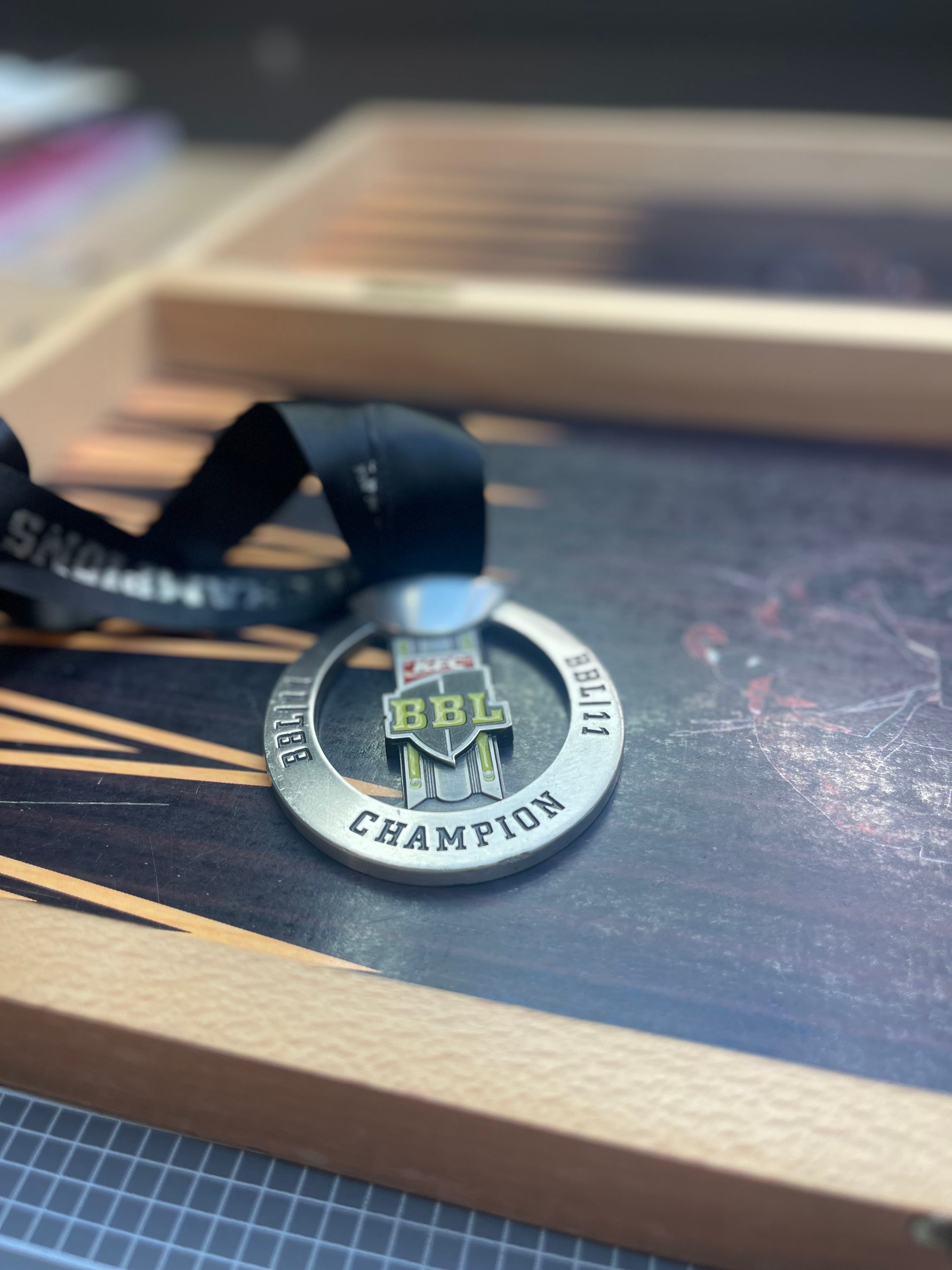
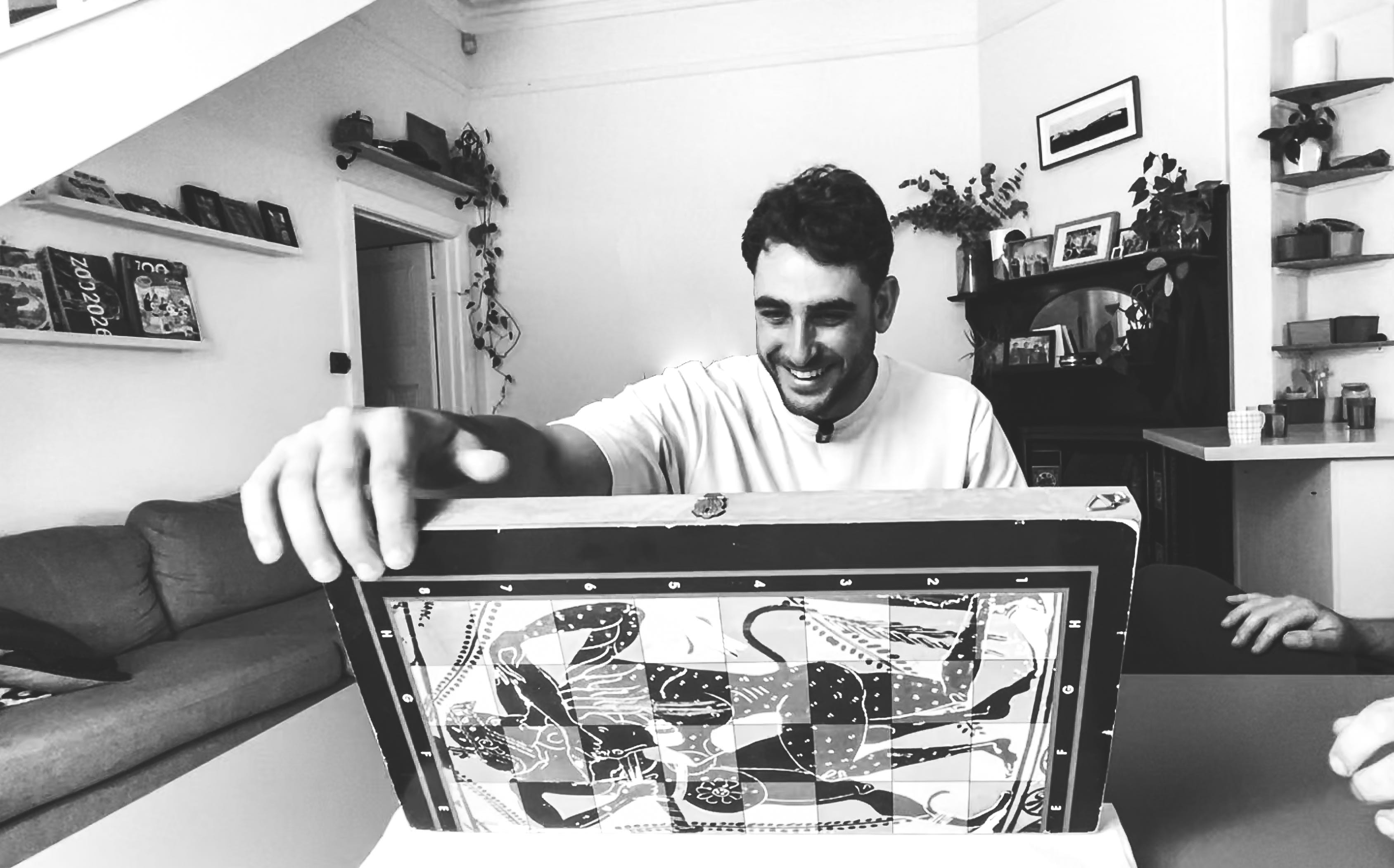
When Peter came to Fisher Classics, the brief was simple on the surface. He had medals that deserved to be presented properly. But framing the medals on their own felt a little too narrow for the story.
The achievement mattered, of course. But the path mattered too.
Thanks for having a read. If you’d like to subscribe to our studios emails you can do so on our site.
The plan
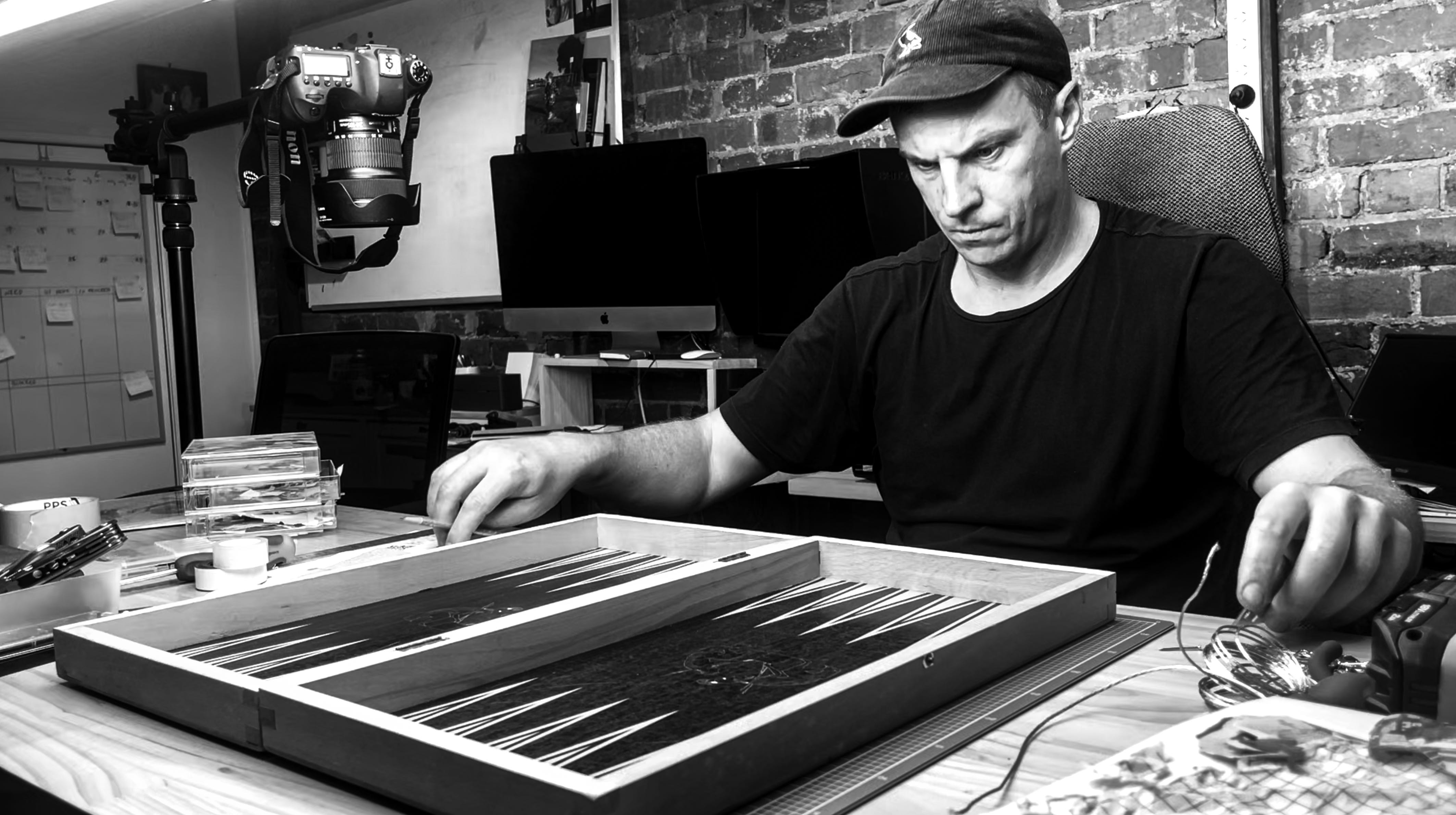
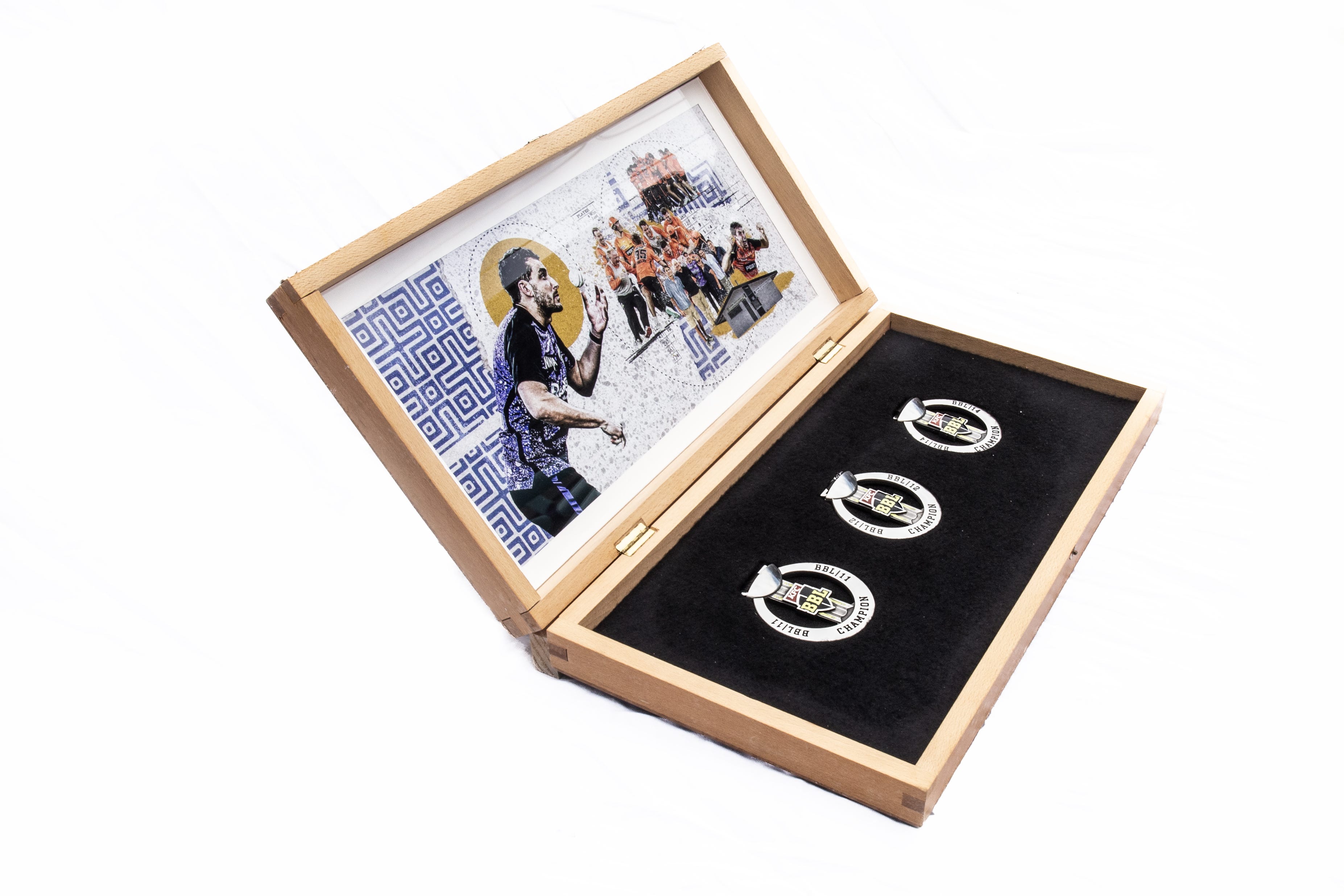
I kept coming back to the idea of a backgammon board. Partly because of its connection to Greek social clubs, family tables and cafe culture. Partly because it gave the piece a practical quality that felt right for Peter. It could be opened and displayed, hung on a wall, laid flat on a table, or closed and put away.
This meant a couple of trips to Oakleigh to find the right board in thrift shops.
That flexibility became a useful part of the idea. The piece didn’t have to behave like a standard framed object. It could sit somewhere between artwork, case and family keepsake.
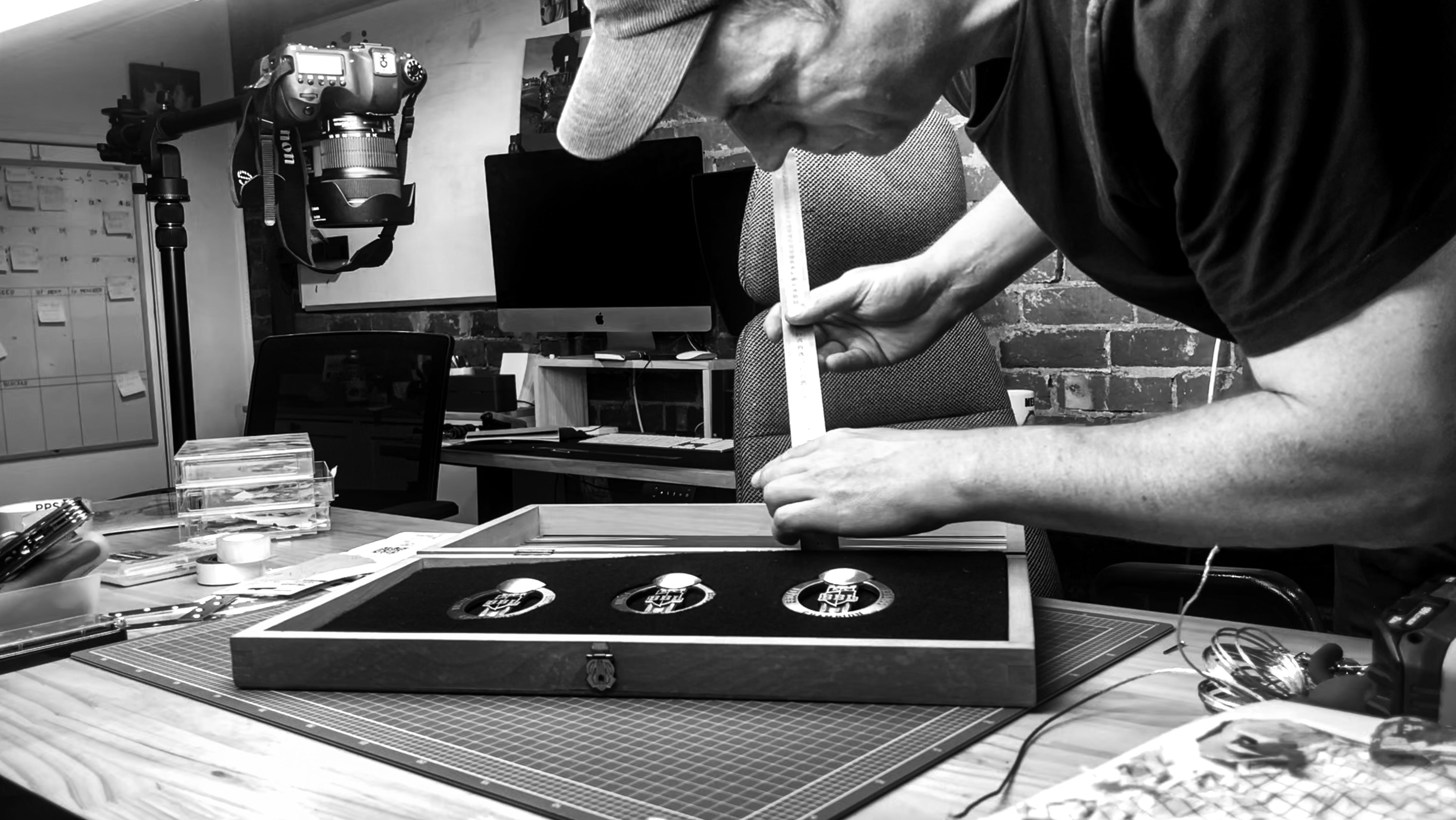
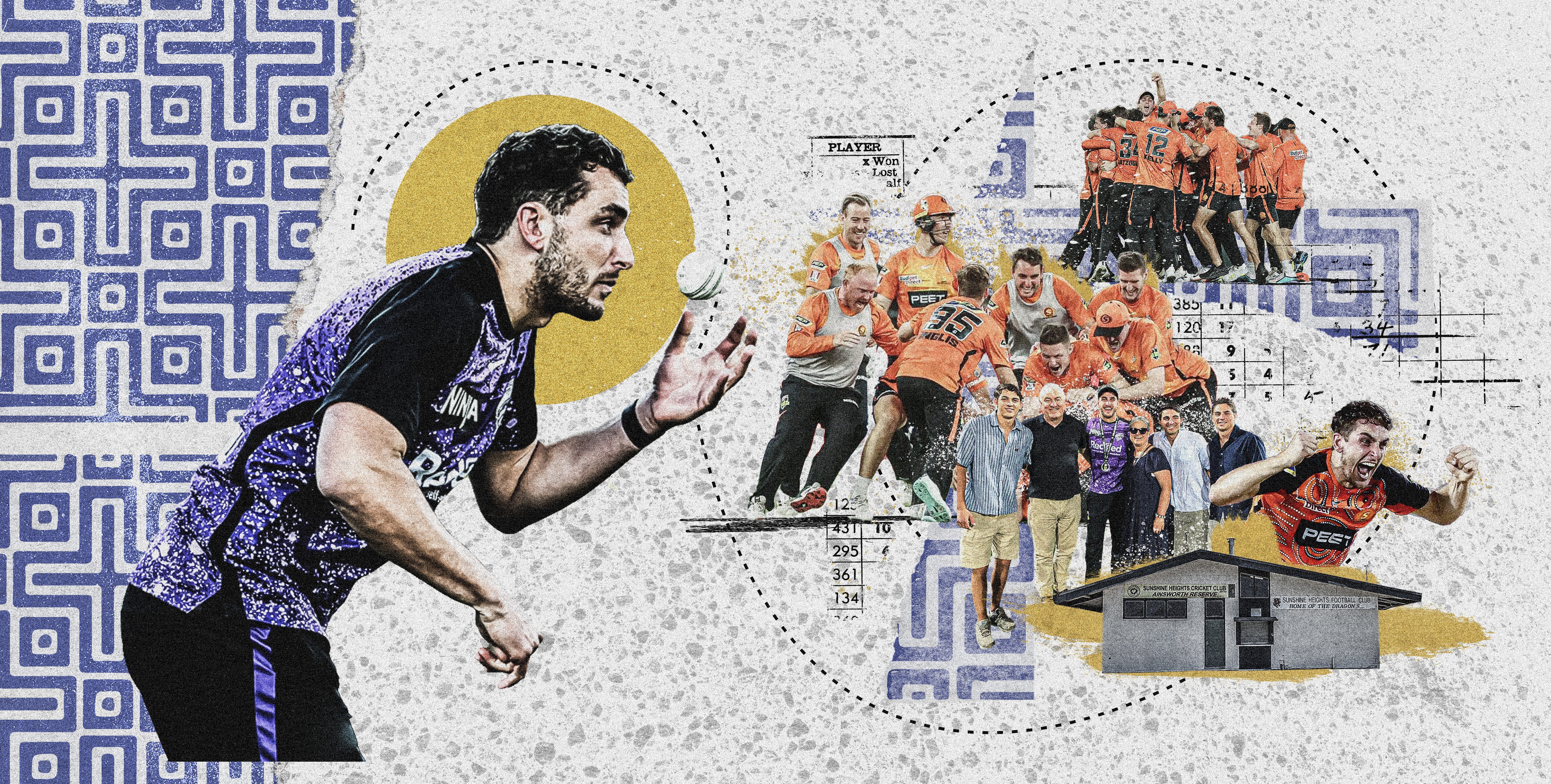
The medals were set into black felt in the lower half of the board, protected and held in place. Above them, an inset artwork told the wider story: the club, the career, the family history, and the unusual leap from suburban practice match to professional cricket.
To build that artwork, I visited Sunshine Heights, Peter’s original club.
Site visits change work. They just do.
You notice the ground, the surfaces, the doors, the colours, the textures. Small things that help place the story somewhere real.


Those details made their way into the artwork. The work needed to feel connected to where Peter’s cricket had come from, not only where it ended up.
The shot
The artwork also drew on Peter’s Greek and Macedonian heritage, with a nod to the idea of The Odyssey. That reference felt natural because his career had a bit of that quality to it: a journey away from home, a strange turn, a run of unlikely events, and something brought back at the end.
In this case, what came back were medals. But also a story worth keeping.
The finished piece works because it does not treat the medals as the whole story. They are the proof, but not the entire meaning. Around them sits club cricket, family history, heritage, ambition, timing, and the oddness of a sporting career that could easily have gone another way.
That is often where commemorative work becomes interesting. Not in making the achievement look bigger than it is, but in finding the right setting for it.


A signed shirt can be valuable, but some careers ask for a different form. They need an object that reflects the person as much as the result.
For Peter, the backgammon board did that. It carried the medals without turning them into a display cabinet. It gave the story shape, while still allowing the piece to feel personal and private. It could live in a room, be opened with family, or be stored away.
The result
Sport gives us plenty of obvious symbols: medals, shirts, scorecards, headlines. But the meaning often sits in quieter places. The first club. The family background. The practice match that led somewhere unexpected.
Peter’s piece became a way of holding those parts together.
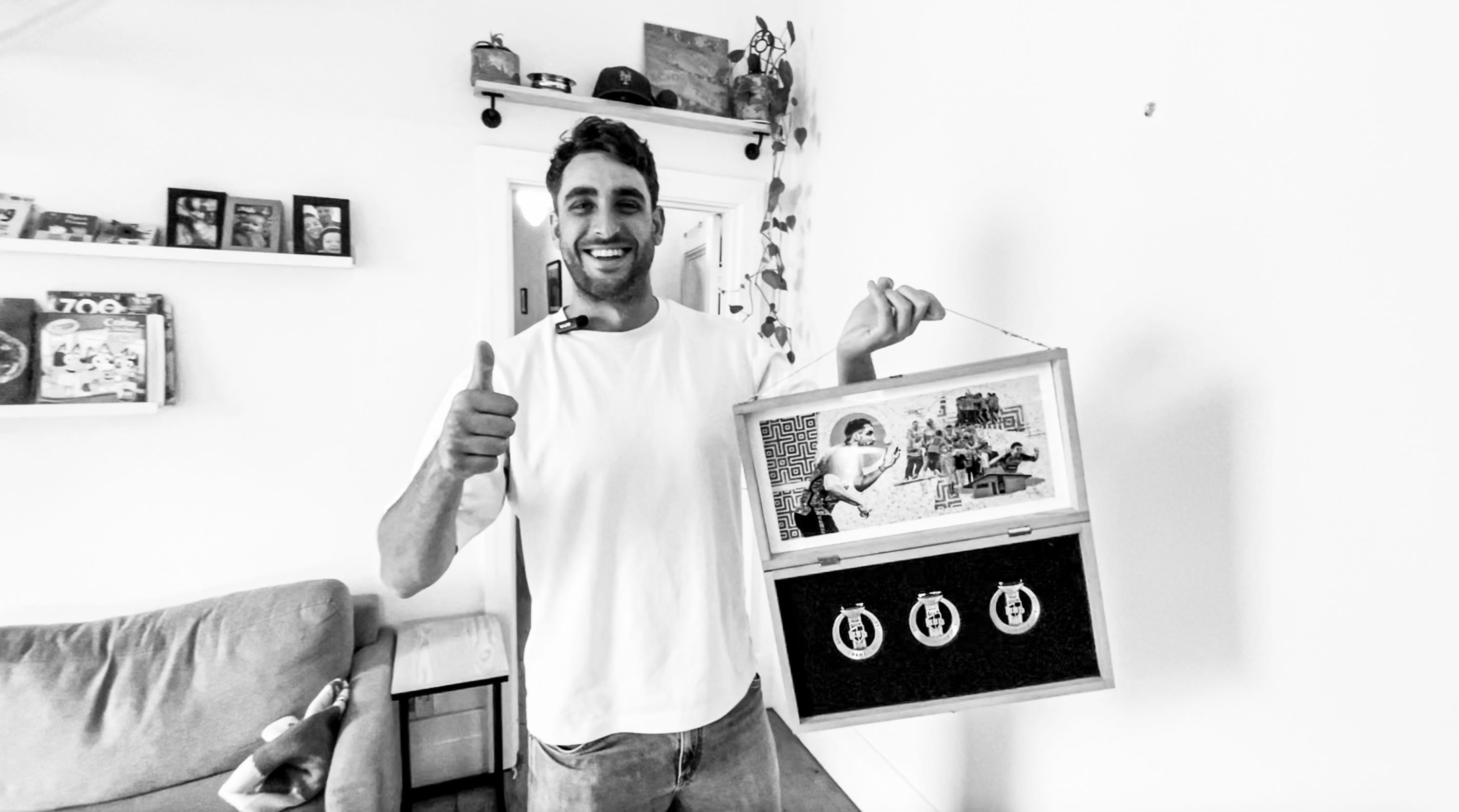
It is a backgammon board, an artwork, and a small record of a career that began in one place and somehow found its way to another.
This is ace!